
أفلام إخفاءGlass的分隔玻璃安装指南
WINGO ·
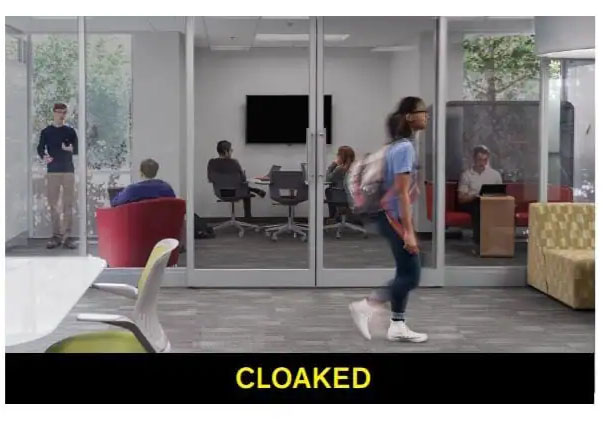
plans glass partition placement for cloaking film, protect compatible displays from outside views, and confirm the viewing conditions before ordering.
وظيفة Filmoptical
Cloaking film is an architectural optical film for glass walls and partitions. When installed between an outside viewer and a compatible display, it obscures the screen content from that external viewpoint while leaving the room and its glass partition visually normal. This can support visual privacy in offices, meeting rooms, and collaborative spaces where sensitive information is shown on displays.
The film is not an electromagnetic, acoustic, or general-purpose security device. It does not block sound, prevent electronic attacks, or replace secure network practices. Its effectiveness depends on the display technology, the placement of the glass, the film orientation, viewing angle, and the distance of the viewer from the partition.
Choosing the Glass Partition Location
Start by identifying every compatible screen that needs protection. For each display, note whether it is positioned close to a glass partition and whether people outside the room can view its content. The relevant partition is the one that stands directly between the viewer and the display, rather than merely nearby glass that does not create the same sightline.
Consider the normal circulation route outside the meeting room. A partition beside the main viewing area may be more important than an isolated glass panel. However, if the same display can also be seen through another partition, window, doorway, or reflective surface, protecting only one panel may not provide a complete visual-privacy solution.
Match the Film to the Display
Cloaking film is designed for compatible LED-backlit liquid crystal displays. It is not a direct-application filter for laptops, phones, most touchscreens, or other smaller devices. Before selecting a film for a glass partition, confirm the display model, size, technology, and viewing arrangement with WINGO. Displays below the recommended size may or may not cloak, and adding film does not guarantee that every screen will be concealed.
Confirm the correct installation orientation with WINGO before ordering. Do not assume that a film intended for one arrangement will perform similarly when rotated or installed on a different partition layout. Compatibility should be checked against the proposed glass and display arrangement, and a sample should be evaluated before final selection.
Test Viewing Conditions
Cloaking film can change in opacity depending on the viewing angle. It may not appear fully opaque in every circumstance. Performance can be weaker when an outside viewer stands very close to the glass or looks through it at an extreme angle. These conditions should be included in the project review rather than treated as edge cases after installation.
Request a sample and place it at several positions on the intended partition. Evaluate the appearance from the normal outside viewing position, from nearby corners, and from close to the glass. Check the display behind the partition under representative room lighting and operating conditions. If the result is not sufficiently discreet for the intended sightline, discuss alternatives with WINGO before proceeding.
Account for Appearance and Integration
The glass may continue to look clear from inside the room while limiting the external view of compatible screens, but the final result depends on alignment and viewing conditions. If extreme-angle views remain distracting, adding suitable graphics may help, although graphics should be reviewed as part of the design and privacy assessment. Avoid placing opaque graphics over important display areas.
Plan the partition layout with the film, glass, display position, and surrounding finishes considered together. Changing any of these elements after installation can alter the viewing result. Confirm whether the installation will be handled during glazing, partition fabrication, or a later retrofit, and provide WINGO with clear photographs, dimensions, display details, and a simple sightline sketch when requesting guidance.
Limitations and Project Confirmation
Visual cloaking is only one layer of information security. The project should still include appropriate access controls, secure display practices, device management, and other measures relevant to the information being shown. Cloaking film should not be presented as protection against every method of viewing or obtaining data.
Sales must confirm suitability when the project includes unusual display sizes, multiple screens, oblique sightlines, touch-sensitive equipment, reflections, or more than one glass surface. WINGO should also confirm the installation orientation and whether a sample is needed. These checks help prevent an unsuitable layout from being specified based only on the product description.
To discuss your glass partition placement, display arrangement, and sample evaluation, contact WINGO and share the project details for a tailored compatibility review.