
PDLC Smart Film Maintenance Questions for Glass Installations
WINGO ·
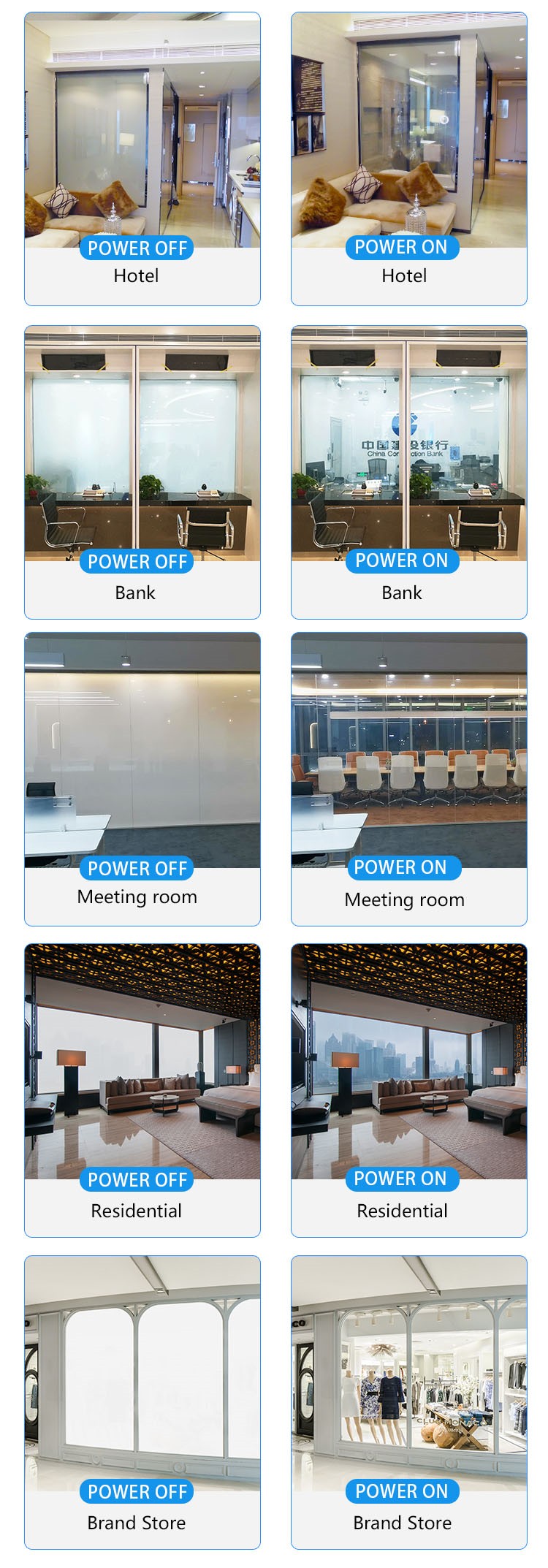
A practical guide to cleaning, electrical care, privacy checks, and replacement planning for self-adhesive PDLC smart film.
What PDLC Smart Film Does
Self-adhesive PDLC smart film is a thin, switchable layer applied to a window or other glazing and connected to an electrical installation. In its opaque state, it provides privacy while still allowing some light through. When energized, it becomes transparent. The same basic on-off function is described here only for this self-adhesive PDLC product; other switchable film technologies may behave differently and should not be treated as equivalent.
The film can be used in private rooms, offices, meeting spaces, hospitality interiors, and selected storefront or projection applications. Because appearance changes with power state, lighting conditions, viewing angle, and the glass underneath, evaluate a sample in the actual setting before approving a larger installation.
Daily Cleaning and Surface Care
Begin with a clean, soft cloth and a mild glass cleaner. Wipe gently rather than scrubbing, and avoid letting cleaning liquid collect at the film edges or enter the electrical connection area. A soft brush or microfiber cloth can help remove loose dust before damp cleaning.
Do not use abrasive pads, sharp tools, solvents, ammonia-based cleaners, or aggressive chemical products unless the supplier confirms they are safe for the complete installed system. The protective surfaces, adhesive layer, and electrical components may have different chemical sensitivities. Test any cleaner on a small, inconspicuous area first.
Keep the film clear of oily fingerprints, adhesive residue, paint, and cleaning chemicals that may require harsher removal. If contamination cannot be removed with gentle cleaning, ask WINGO before using a treatment that could damage the protective or conductive layers.
Electrical and Switching Checks
The film is operated through its controller and electrical installation. If the film does not change state, first check the controller setting and confirm that the intended zone is receiving power. Avoid repeatedly cycling the film while troubleshooting an electrical fault. If there is smoke, unusual heat, a burning smell, visible cable damage, or moisture near the connections, switch off the appropriate supply and seek qualified electrical assistance.
Ask the supplier which controls are compatible before planning switches, remotes, or app-based control. Multiple pieces can be joined to form larger switchable panels or partitions, but the electrical arrangement, panel layout, and switching method must be confirmed for the project. Sales must confirm whether a proposed controller and installation method suit the intended application.
How Often Should the Film Be Inspected?
Make routine visual checks of the viewing surface, edges, joins, and exposed electrical parts. Look for peeling, lifting, trapped moisture, bubbles, scratches, discoloration, uneven switching, or a section that no longer responds normally. Pay particular attention to edges and joints, where contamination and mechanical stress can begin.
Inspection frequency depends on the environment and exposure to cleaning, moisture, heat, dust, and handling. High-traffic commercial spaces may need more frequent attention than lightly used interior partitions. There is no need to polish the film or apply additional coatings unless the supplier specifically approves a compatible treatment.
Removing Dust, Marks, and Small Blemishes
For light dust, use a clean microfiber cloth. For fingerprints, use a lightly dampened soft cloth with an approved mild cleaner, then remove residue with a second clean cloth. Work across the surface without pressing hard against the film.
Do not attempt to cut, lift, puncture, or scrape the film to remove a blemish. Scratches, edge lifting, or persistent marks may indicate that replacement is more appropriate than further cleaning. If the film has been damaged, disconnect and isolate the affected circuit as appropriate before handling the damaged area, especially if electrical parts are involved.
What to Confirm Before Ordering or Installing
Before ordering, identify the window or glazing type, exact dimensions, desired shape, room conditions, lighting expectations, and how privacy will be controlled. Ask whether the film should be cut to size or supplied as a custom piece, and confirm how multiple sections will be joined if the project is larger than a single panel.
Also confirm the installation surface, access conditions, cleaning routine, local electrical requirements, and who will coordinate the glass and electrical work. Self-adhesive film is designed for application to suitable existing or new glass without specialist film installation equipment, but surface condition and application access still matter. Sales should confirm suitability for the exact substrate, geometry, environment, and intended use before an order is approved.
WINGO bilan qachon bog‘lanish kerak
Agar o‘rnatish egri yoki noodatiy shakldagi shishani, ko‘plab birlashtirilgan bo‘laklarni, noodatiy yoritishni, tashqarida foydalanishni, avtomobil oynasidan foydalanishni yoki tekshirilmagan boshqaruv tizimini qamrab olsa, xarid qilishdan oldin WINGO bilan bog‘laning. Ishni boshlashdan oldin tozalash mosligi, o‘rnatishga tayyorgarlik, kontroller tanlash va texnik xizmat ko‘rsatish bo‘yicha maslahat so‘rang.
Agar film allaqachon o‘rnatilgan bo‘lsa va ko‘tarilish, doimiy optik nuqsonlar yoki boshqarish muammolari paydo bo‘lsa, elektr xavfi bo‘lgan taqdirda muammoli zanjirni foydalanishdan to‘xtating va yetkazib beruvchiga belgilar hamda simptomlarning tavsifini yuboring. Loyihaga xos texnik xiznat rejasi bo‘yicha yoki shisha, boshqaruv va foydalanish sharoitlari haqida WINGO bilan muhokama qilish uchun jamoa bilan to‘g‘ridan-to‘g‘ri bog‘laning.