
Decorative Film for Interior Partition Design
WINGO ·
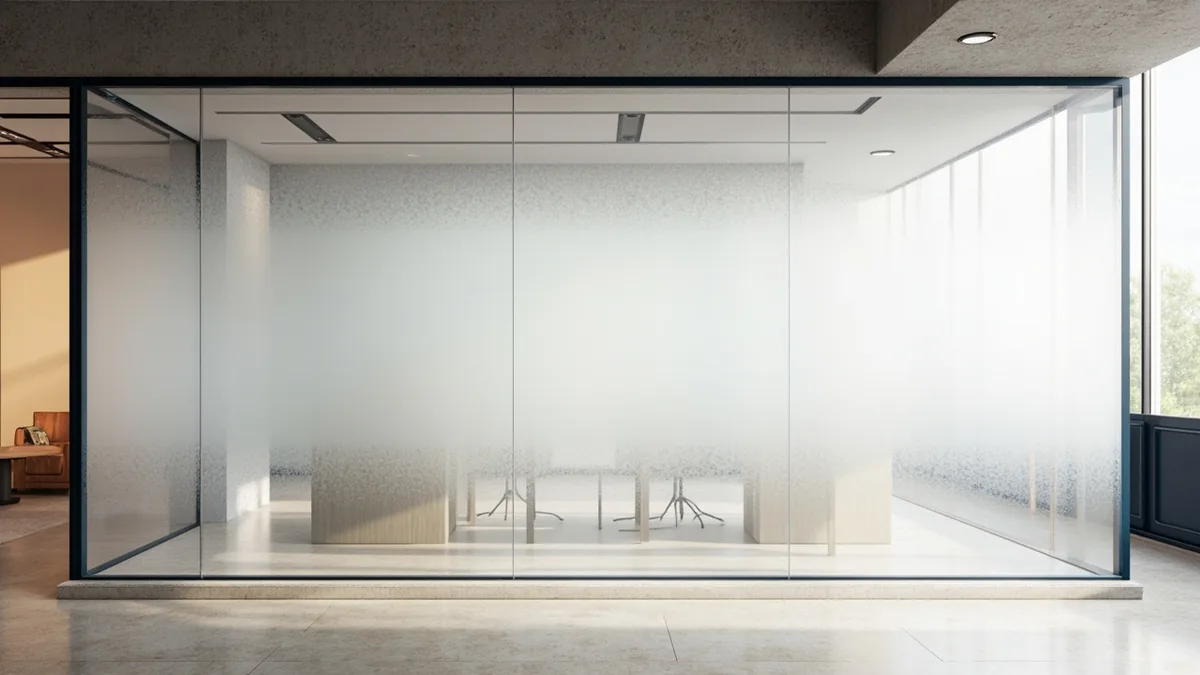
Choose reeded, gradient, frosted, or patterned decorative film to create a more private, polished interior partition without replacing the glass.
Redesign Interior Glass Without Replacing It
Decorative film offers an alternative to replacing a glass partition when the goal is to improve privacy, visual character, or the sense of separation between spaces. Suitable applications include meeting rooms, offices, bathrooms, doors, and commercial interiors. A well-chosen film can turn a plain pane into a defined architectural feature while retaining natural light and avoiding extensive construction work.
The range includes reeded film, gradient film, frosted designs, colored effects, rainbow window clings, three-dimensional motifs, static-cling bathroom-door film, and seasonal window decorations. These are decorative interior products; their appearance, opacity, and privacy effect should be assessed for the intended setting rather than treated as interchangeable.
Select the Visual Effect for the Partition
Reeded film creates a directional, textured appearance. Its spacing and depth can make glass feel more substantial while still allowing light through, making it useful for office partitions, consultation rooms, and bathroom doors. Clear, tea, gray, black, and frosted variations offer different balances between visibility and screening.
Gradient film is suited to partitions where privacy should increase toward the lower portion of the glass. It can preserve an open visual connection near the top while creating separation below. Patterned, colored, and three-dimensional options can support a more decorative interior concept, while frosted or opaque white treatments provide greater screening for spaces that need more discretion.
Because glass, lighting, viewing angles, and surrounding finishes affect the result, request samples or sightlines before making a final selection. Sales must confirm that the chosen pattern, opacity, and dimensions suit the specific partition.
Understand Privacy and Light
Decorative films provide varying degrees of privacy and opacity. Some are intended to obscure direct views, while clearer or patterned versions maintain a stronger connection with the surrounding room. White privacy films can limit scrutiny from outside or between spaces while allowing most natural light to pass through, although the final result depends on the selected film and installation conditions.
For a meeting room, consider whether participants need visual separation from a corridor, a nearby workstation, or an adjoining office. For a bathroom door, assess the need for privacy against the desire to retain brightness. For a reception partition, appearance and openness may be more important than complete concealment.
Decorative film is not a security system, and the appearance of privacy can change with illumination. Confirm the expected daytime and nighttime viewing conditions, especially where opposing light sources create reflections.
Prepare the Surface and Install the Film
For the most effective application, clean the glass before applying the film. Remove the backing, generously wet both the back of the film and the window with soapy water, position the film, and then remove excess water and trapped bubbles. Finish with a lint-free towel.
The film should be fitted to clean, smooth glass with careful handling around edges and corners. Measure the usable area before purchase and account for the application method and pattern direction when discussing the order. Installation instructions may vary by construction and adhesive type, so follow the instructions supplied for the selected product.
The range includes self-adhesive and static-cling options for different installation needs. Clarify whether permanent-looking adhesion or removable application is preferred, and whether the glass surface and intended room support the chosen installation approach. Avoid claiming that every film can be reused after removal.
Product Families and Sizing Questions
WINGO’s decorative window film items are supplied in different ranges. The general decorative window film group includes WG101, WG101K, WG102, WG102K, WG103, WG103K, WG105, and WG106, all made from PET with a thickness of 2 mil and a roll size of 1.52 by 30 meters. Reeded film includes WG-B004, WG-C001, WG-C002, WG-C004, WG-C005, WG-C006, and WG-C008, also in PET at 2 mil and generally supplied at 1.52 by 50 meters.
Gradient film includes WG-301, WG-301D-A through WG-301D-E, WG-314, WG-315, WG-315D, and WG-317. Most use PET at 2 mil, with roll sizes listed as either 1.52 by 30 meters or 1.83 by 30 meters. As each code may represent a distinct visual effect, confirm the exact item rather than selecting only by category.
Before ordering, measure the partition width and height, identify the glass type, note whether the film will be applied to a door that opens, and decide which privacy level and visual style are priorities. Ask WINGO to confirm stock, suitability, cutting needs, installation accessories, and the appropriate product code for your project.
Plan the Project with WINGO
A successful decorative partition balances privacy, brightness, visual style, and installation conditions. Samples, clear measurements, and a review of the room’s lighting can prevent surprises, especially for patterned, gradient, frosted, or reeded designs.
Contact WINGO to discuss your interior partition project and receive guidance on selecting the appropriate decorative film, confirming availability, and planning the installation.