
LED Film Screen Storefront Display Planning Guide
WINGO ·
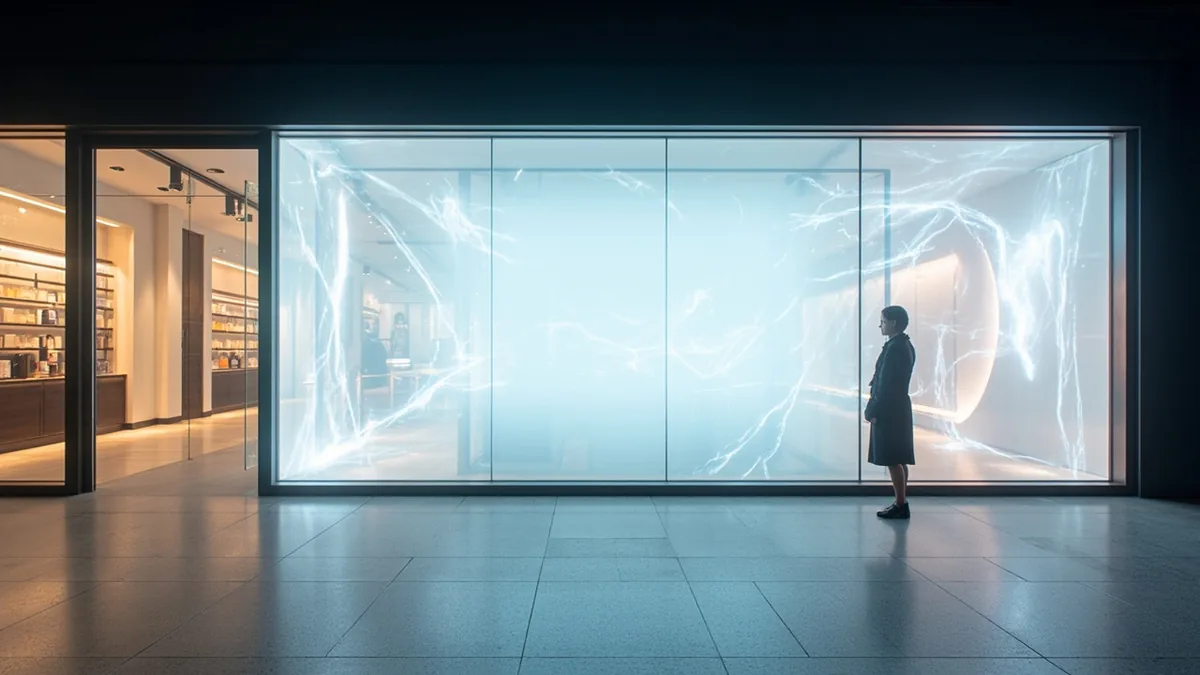
Plan a flexible LED film screen storefront display by reviewing placement, installation, content, operating needs, and product limitations with WINGO.
What an LED Film Screen Adds to a Storefront
An LED film screen provides a lightweight display surface for storefront windows, glass entrances, and interior walls. Its ultra-thin construction supports a less intrusive presentation than a bulky framed display, while its flexible material can follow curved surfaces and can be cut to fit the intended area. This makes it useful when the project needs visual impact without rebuilding the surrounding architecture.
For storefront planning, begin with the customer journey and the role of the display. A window-mounted screen can attract attention from outside, support product promotion, or deliver information near an entrance. An interior application may work better for wayfinding, campaign messaging, or a changing brand presentation. The best position depends on sightlines, daylight, pedestrian movement, and how often the content will change.
Plan Around Space and Viewing Conditions
Measure the proposed installation area and inspect the substrate before selecting a layout. The screen can be applied to glass or walls with different curvatures, but the condition and shape of the surface still matter. Check for edges, joints, handles, frames, condensation, rough finishes, and areas where movement may occur. A continuous, clean application zone is generally easier to prepare than a fragmented surface.
Daylight has a major influence on display performance. Although the film offers high transparency and allows normal lighting to continue through it, the visible brightness and contrast of the content may vary with ambient light, viewing angle, and the chosen display setting. Sales should confirm whether the screen is suitable for the intended daytime brightness, viewing distance, and orientation rather than assuming that transparency alone guarantees readability.
Plan access for cables, signal connections, power, and maintenance. Confirm where the equipment will be located and how the installation will be routed without creating trip hazards or obstructing doors. The screen itself may be simple to apply, but safe cable management and suitable power and signal arrangements remain essential parts of a storefront project.
Choose Content and Operating Needs
Decide whether the screen will show short promotional loops, schedules, product information, branding, or a combination of content. Prepare the required aspect ratio, resolution, file formats, playback method, and operating schedule before installation. If content changes frequently, consider how staff will update it and whether the control system can be reached conveniently without shutting down the storefront.
The product is designed for gentle application and straightforward signal and power connection, but installation conditions still affect the result. Ask sales to confirm the supported control and power arrangements, available display sizes, and any recommended handling steps. If the project requires unattended operation, integration with a building system, or special mounting around a shaped surface, those needs should be documented early.
Understand the Product Limitations
LED film screen is a display product, not a replacement for every type of storefront signage. It should not be assumed to provide the same brightness, contrast, viewing range, or environmental resistance as conventional outdoor LED signage. The supplied product information does not define weather exposure, outdoor ratings, service life, or performance under direct sunlight, so these points require confirmation before any exposed exterior installation is approved.
The screen can be cut and flexed, but those features do not eliminate the need for careful preparation or professional installation. Sharp cuts, tension, trapped air, uneven surfaces, and unsuitable cleaning methods may affect application quality. Confirm whether the proposed substrate, curvature, edge treatment, and environment are supported for the specific project.
Do not infer privacy, variable opacity, or power-controlled switching from other smart-film products. This guide does not treat the LED film screen as a privacy film, and planning should focus on display performance, transparency, placement, and installation.
Questions to Confirm Before Ordering
Ask WINGO to confirm the available screen dimensions and whether the planned shape can be produced within the product configuration. Provide photographs or measurements of the intended glass or wall area, the viewing direction, expected operating hours, and the location of power and signal equipment. Also clarify whether the installation is indoors, behind glazing, or exposed to the outdoor environment.
Request confirmation of the recommended application process, cleaning requirements, connection method, and whether additional installation accessories or controls are needed. For a storefront with unusual dimensions or curved surfaces, sales must assess suitability based on the submitted site information. Do not make final purchasing decisions until the layout and technical requirements have been reviewed against the confirmed product configuration.
Prepare a Practical Storefront Brief
A useful project brief includes the site address, photographs, approximate measurements, intended screen placement, viewing distances, content purpose, operating schedule, and installation timing. Note any architectural features, access restrictions, electrical requirements, or maintenance concerns that may affect the work. This information helps sales determine whether the proposed use aligns with the product and identify any unresolved risks before installation.
The LED film screen offers a thin, lightweight, flexible, and cuttable display option that can be applied to suitable glass or walls without changing the building’s appearance. Because daylight, surface condition, content, and installation conditions shape the result, early technical confirmation is essential. Discuss your storefront project with WINGO to review the available configuration and plan the next steps.