
Non-Adhesive PDLC Film: A Laminated Glass Project Guide
WINGO ·
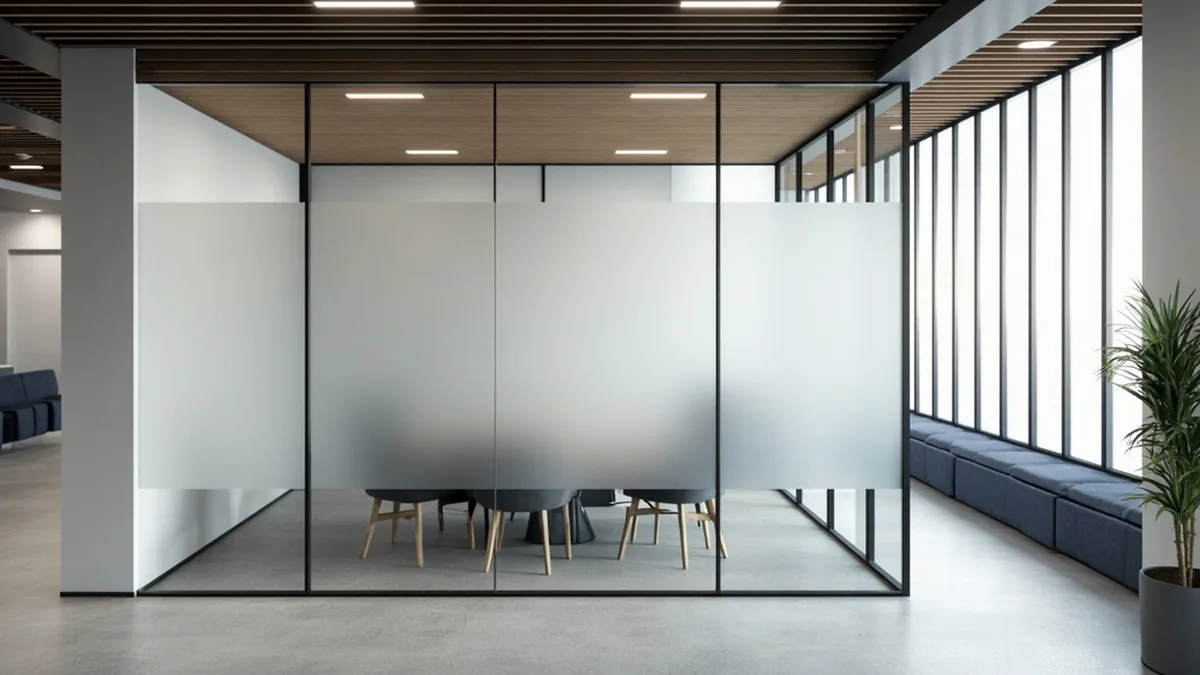
Plan a switchable-glass project using non-adhesive PDLC film, with key questions to ask about lamination, controls, glass selection, and installation readiness.
What Non-Adhesive PDLC Film Is
Non-adhesive PDLC film is a switchable laminated-glass component without a self-adhesive layer. It is intended to be placed between panes of glass during the manufacture of smart glass; it cannot be installed separately onto an existing window. The product contains conductive transparent layers with polymer-dispersed liquid crystal between them.
For new architectural glass, the film can be laminated between two glass panes using EVA interlayers and an autoclave process. This makes it suitable for fabricators developing new partitions, doors, windows, or other glazed elements where the switchable layer is built into the glass rather than applied afterward.
The switching behavior is electric: with power on, the liquid crystal molecules align so light can pass through and the glass appears clear. With power off, the molecules become irregular and scatter light, making the film opaque while still allowing some light through. A simple on-off control provides privacy and visual flexibility in the finished glass.
Where It Fits in a Laminated Glass Project
This product is best treated as a factory lamination material, not a retrofit film. A project specification should identify it as the non-adhesive PDLC core used in a glass-laminating build. If an existing pane must become switchable without replacement, a self-adhesive film applied to the glass is a different route and should be evaluated separately.
The laminated assembly typically consists of the PDLC film, EVA interlayers covering both sides, and two glass panes. The glass fabricator is responsible for confirming that the laminate build, glass combination, interlayer arrangement, edge treatment, and processing cycle are appropriate for the intended product.
Non-adhesive PDLC film is therefore most relevant to new glazing packages and custom smart-glass fabrication. It may also be considered by glass processors working on doors, interior screens, office partitions, hotel features, and privacy applications where the design calls for integrated switchability.
Questions to Confirm Before Ordering
Start with the finished-glass design. Ask whether the project needs a door, fixed partition, window, façade element, or another configuration. Confirm the number of glass panes, glass types, thicknesses, edge exposure, and whether the assembly will be framed or installed with exposed edges.
Then review the laminate details with the fabricator. WINGO should confirm the film format, maximum available width, handling requirements, and whether the proposed EVA and autoclave process is suitable. The supplier and glass processor must agree on the laminate specification because fabrication variables can affect the finished assembly.
Also clarify the operating environment. Ask how the glass will be controlled, where the wiring will terminate, and whether there is a requirement for manual switching, a wall switch, or integration with a building system. The power and control arrangement should be planned before the laminated glass is produced rather than added after installation.
Optical and Dimensional Selection
The supplied product information lists high visible light transmission when the film is powered on, low haze in that state, a broad viewing angle, and low hot-shrinkage behavior intended to help reduce smart-glass edge shrinkage. These characteristics make clear-state visibility and panel appearance important selection points.
WINGO can confirm the current film specifications and available dimensions against the project drawings. Sales should not assume that a general glass drawing is adequate: provide finished dimensions, cut details, orientation, and any special shape or edge condition. The stated maximum film width must also be checked against the panel size and fabrication layout.
Glass selection should be coordinated with the fabricator rather than made from optical expectations alone. The selected panes, interlayers, film placement, and edge finish all contribute to the final optical result and durability of the laminated assembly.
Limitations and Fabrication Risks
The most important limitation is that the film cannot be installed on its own. A project that expects a simple roll-on application, immediate retrofit, or field installation of the non-adhesive film has misunderstood the product format. Installation requires proper glass lamination by an experienced fabricator using an approved process.
Do not assume that an opaque film blocks all light. In the off state, the film scatters light and creates privacy, but the supplied description states that some light can still pass through. Visibility requirements should therefore be reviewed with sample viewing conditions and the complete glass build.
The product information also does not establish suitability for every glass thickness, shape, edge condition, or installation environment. Those details must be confirmed by the glass processor. WINGO sales can support product selection and provide the relevant product information, but final process compatibility and fabrication approval remain project-specific decisions.
A Practical Path to Project Approval
Before quotation or specification approval, assemble a concise project pack: architectural drawings, finished panel sizes, glass and laminate requirements, intended locations, operating-control concept, electrical routing information, and installation expectations. Mark which dimensions are measured for the final glass panels rather than the openings.
Review the pack with WINGO and the glass fabricator. The manufacturer can confirm film availability and product characteristics; the fabricator can approve the laminate construction, processing method, edge build, handling, and delivery format. This division of responsibility helps prevent unsuitable assumptions early in the project.
Once the build is aligned, record the approved film and glass specification on the project documentation. Include the selected switching arrangement and any interface requirements for the electrical contractor. The final installation should follow the approved assembly and wiring details, with no attempt to separate or field-install the PDLC layer.
Discuss the Project with WINGO
WINGO can help review non-adhesive PDLC film options for a new laminated-glass project, clarify product dimensions and specifications, and identify the information needed for fabricator approval. Share your drawings, glass build, panel sizes, control requirements, and timeline so the appropriate details can be checked. Contact WINGO to discuss your project with a product specialist.