
Non-Adhesive PDLC Film for New-Build Smart Glass
WINGO ·
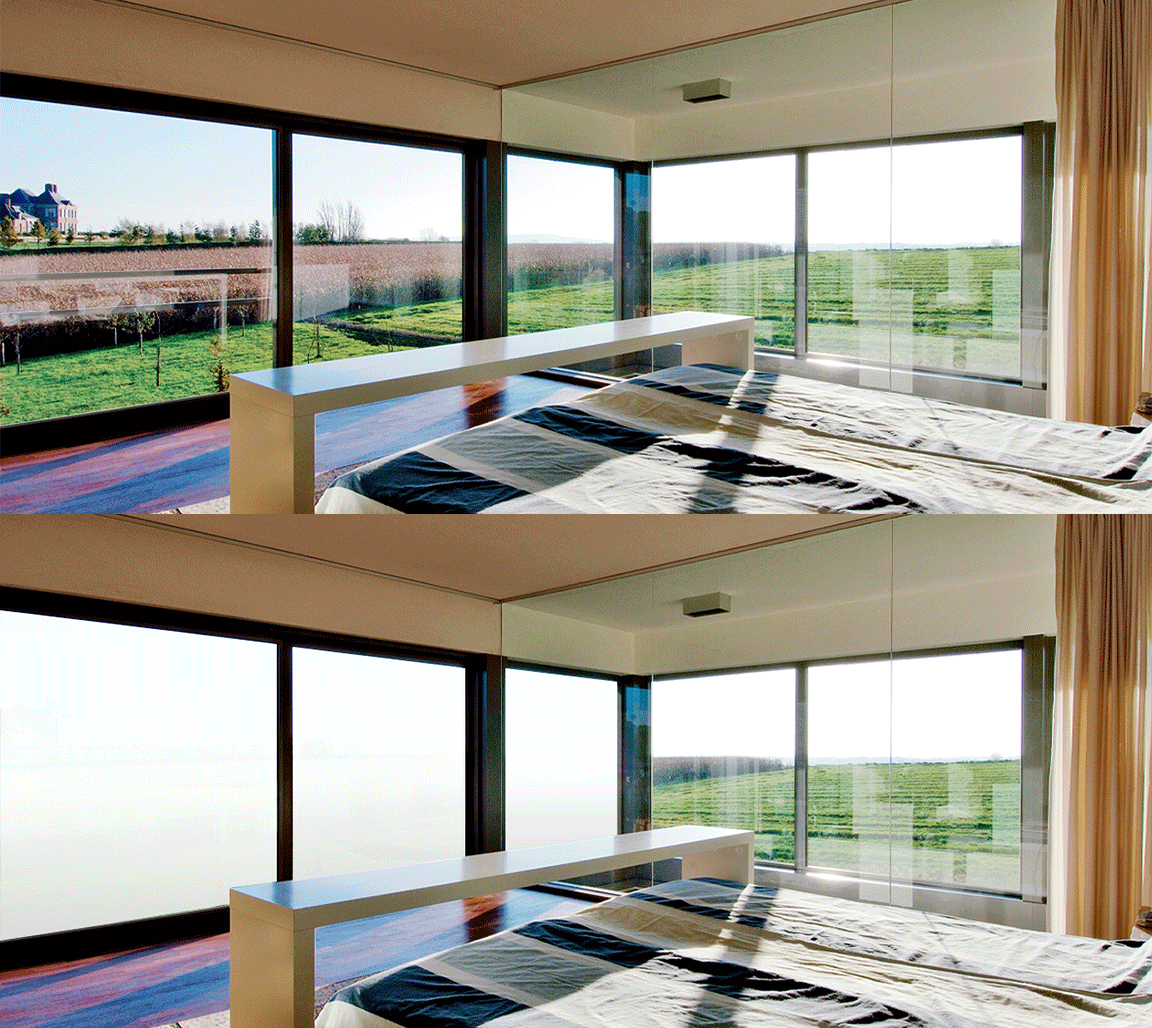
Plan a new-build laminated smart glass project using non-adhesive PDLC film, with guidance on glass, lamination, electrical design, and supplier confirmation.
What Non-Adhesive PDLC Film Is
Non-adhesive PDLC film is a laminated smart-glass component supplied without a self-adhesive layer. It is not intended to be installed directly onto an existing window or partition. Instead, it is positioned between two panes of glass and bonded into the glass assembly using compatible EVA interlayers and an appropriate lamination process.
The construction consists of transparent conductive ITO layers surrounding a polymer-dispersed liquid crystal layer. When electrical power is applied, the liquid crystal molecules align so light can pass through and the glass appears clear. Without power, the molecules scatter light and the glass appears opaque while still transmitting some light.
When It Is the Right Choice
This product is intended for new-build fabrication of switchable smart glass. It is suitable where the project includes purpose-made glass panels and the design team wants electrical privacy control built into the glazing rather than added as a surface-applied film.
Typical applications include internal glass partitions, meeting-room screens, office separation, hotel privacy glazing, and other architectural partitions controlled by a building or room power system. The reference identifies offices, conference rooms, hotels, and homes as potential settings.
Because the film cannot be installed separately, it is not the appropriate choice for retrofits involving existing windows. A self-adhesive product may be relevant to that different installation method, but it should be assessed separately. Sales must confirm that the proposed construction matches this non-adhesive product before ordering.
Key Performance Characteristics
The supplied product information reports high visible light transmission in the clear state, low haze in the clear state, a wide viewing angle, and low hot-shrinkage. These characteristics can support clear sightlines, daylight use, and stable fabrication of laminated panels.
Switching is described as a simple on and off function. With power on, the panel is clear; with power off, it is opaque for privacy and light diffusion. The opaque state is not completely light-blocking, so visual privacy and glare control should be reviewed using an approved sample and the intended lighting conditions.
The reported maximum film width indicates that panel layouts must be checked against available material dimensions. Oversized panels, unusual cuts, edge details, and patterns that extend close to the glass edges require fabrication review before acceptance.
Glass, EVA, and Lamination Coordination
The glass fabricator should select the pane construction, glass types, EVA interlayers, and lamination cycle for the specific project. The reference states that the film can be laminated between two pieces of glass using EVA film covered on both sides, with lamination performed using a standard autoclave.
PDLC film is electrically functional, so fabrication and quality-control procedures must address electrode coverage, bus-bar connections, edge alignment, and the final electrical interface. These details are not fully defined in the basic product description and should be settled with WINGO and the fabricator before production.
Confirm whether the required configuration uses EVA on both sides, how power and switching hardware will be connected, and how finished panels will be tested. Also establish handling instructions for storage, transportation, edge protection, installation, and servicing around the electrical components.
Planning the New-Build Design
Begin with the design intent: determine which panels must switch, whether they operate together or in groups, and where manual switches or building controls will be located. Decide how privacy is used throughout the day and whether clear-state daylight and opaque-state diffusion meet the architectural intent.
Next, review panel sizes, glass make-up, visible edges, framing, door interfaces, and maintenance access. Discuss the electrical supply, switching arrangement, cable routing, and expected control sequence with qualified project parties. Avoid assuming that every partition requires the same switching layout.
Before ordering, request confirmation of whether the film is suitable for the proposed glass build-up, orientation, panel dimensions, edge treatment, and lamination route. WINGO should also confirm current product availability and any project-specific technical documentation at quotation stage.
Questions to Resolve Before Purchase
Ask WINGO and the glass fabricator to confirm the exact film type supplied, supported panel construction, maximum available width, storage requirements, and approved handling method. Clarify how the film is protected during fabrication and how bus bars, leads, switches, and controls are integrated.
Review the power-on and power-off appearance in an approved sample under the project’s real lighting conditions. Confirm the expected control method, installation sequence, test procedure, and responsibility for post-fabrication electrical commissioning.
Also ask who handles replacement if a panel is damaged, whether specialist electrical work is required, and what cleaning and maintenance instructions apply. These answers help separate product suitability from assumptions that must be validated for the complete assembly.
Final Project Check
A disciplined handover should include approved drawings, a verified material schedule, fabrication instructions, electrical details, panel locations, switching groups, and a clear inspection plan. Any deviation in glass, interlayer, panel size, or installation method should return to WINGO for confirmation before production continues.
If you are planning new switchable glass, invite WINGO to review your project brief, drawings, panel schedule, and control requirements so the appropriate non-adhesive PDLC film configuration can be discussed with your glass fabricator.