
PDLC Smart Film for Office Retrofit Planning
WINGO ·
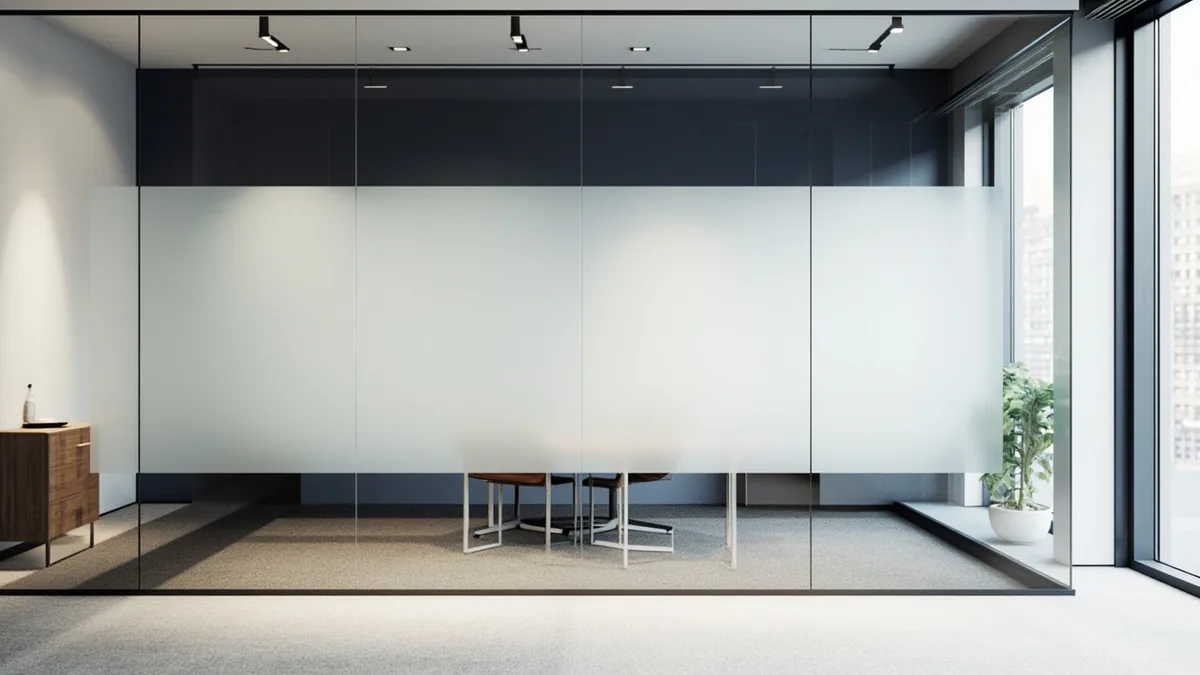
A practical guide to planning self-adhesive PDLC smart film for offices, meeting rooms, glazed partitions, and controlled privacy without replacing existing glazing.
What PDLC Smart Film Changes in an Office
Self-adhesive PDLC smart film is a thin switchable layer applied to an office window or glass partition and connected to an electrical installation. In its normal operating mode, it switches between transparent and opaque states. With power on, the film becomes transparent for visibility and an open sense of space. With power off, it becomes opaque while still allowing some light through, providing visual privacy rather than creating a completely dark room.
The film can suit existing or new glass and is intended for offices, meeting rooms, banks, hotels, laboratories, healthcare practices, and other spaces where privacy and flexibility are useful. Its self-adhesive construction supports peel-and-stick installation without specialist installation equipment, although careful preparation and electrical connection are still important.
Where It Can Be Useful
Common office retrofit applications include glazed meeting-room walls, internal partitions, offices near busy circulation areas, private workspaces, reception zones, and rooms where visibility needs to change during the day. Multiple pieces can be joined to create larger switchable panels or partitions, and custom shapes and sizes are available when standard rectangular layouts do not fit the existing architecture.
The film may also help reduce glare and support more efficient use of interior space. It can provide a switchable projection surface in suitable locations, and it may be selected for privacy control, visual flexibility, or a cleaner alternative to adding conventional blinds. These benefits should be matched to the room’s lighting, layout, and intended operating pattern rather than treated as automatic solutions.
Planning Around the Existing Glazing
Before specifying the film, record the location, glass type, panel dimensions, frame construction, edge condition, and whether the glazing is fixed, operable, curved, or divided into multiple sections. Check how users will access the surface and where the controller and wiring can be installed. A retrofit plan should also identify nearby furniture, door swings, handles, heating elements, signage, and other features that could affect placement or daily use.
The film is supplied in different widths and can be cut to size, but cutting does not remove the need for a layout review. Confirm that the proposed panels can be covered without interfering with frames, seals, openings, or cleaning routines. For nonstandard shapes or joined sections, ask WINGO to review the dimensions and installation sequence before ordering.
Power, Controls, and Operating Logic
PDLC smart film requires connection to the electrical installation. The operating state depends on the controller and the power supplied to the film; the normal behavior is transparent when powered and opaque when unpowered. Control options described for the product include switches, remote controls, and app-based control, but the available method and system arrangement must be confirmed for the project.
Plan the control location so staff can change privacy without obstructing a doorway or creating a trip hazard. Also decide what should happen during a power interruption, shutdown, or maintenance. Because the unpowered state is opaque rather than clear, a business that requires continuous visibility during outages should discuss backup power or an alternative control strategy with WINGO before finalizing the design.
Limitations and Selection Questions
PDLC film does not make a room fully dark: even in its opaque state, some light passes through. It may not provide the same privacy, acoustic performance, security, or light-blocking result as a solid wall or opaque blind. Appearance, contrast, haze, viewing angle, and perceived clarity can vary with the glass, lighting, surrounding colors, and viewing position, so sample review and a site trial are advisable.
The film is not automatically suitable for every glass or installation condition. Ask whether the glass is clean, smooth, intact, and compatible with an adhesive application; whether edges can be sealed and protected; and whether the panel will be exposed to moisture, chemicals, impact, or difficult cleaning. Confirm whether existing coatings, screens, decals, or textured surfaces must remain. Sales must confirm suitability before ordering, particularly when the project involves unusual glazing, complex partitions, or special operating requirements.
A Practical Retrofit Checklist
Start with the privacy problem, then assess the glass, room, controls, maintenance access, and electrical arrangement. Prepare a simple room-by-room schedule showing the desired clear or opaque state, control location, expected daily use, and any areas where users need visibility or darkness. Review edges, joins, panel dimensions, and access with the supplier before fabrication or installation.
Finally, consider the operating experience: who will use the controls, how will staff clean the film, and what is the acceptable response when power changes? A small representative area can help evaluate appearance and usability under real office lighting. WINGO can discuss the project layout, product selection, and next steps; invite the reader to share drawings, photos, or room requirements for an initial conversation.