
PDLC Smart Film Project Measurement Checklist
WINGO ·
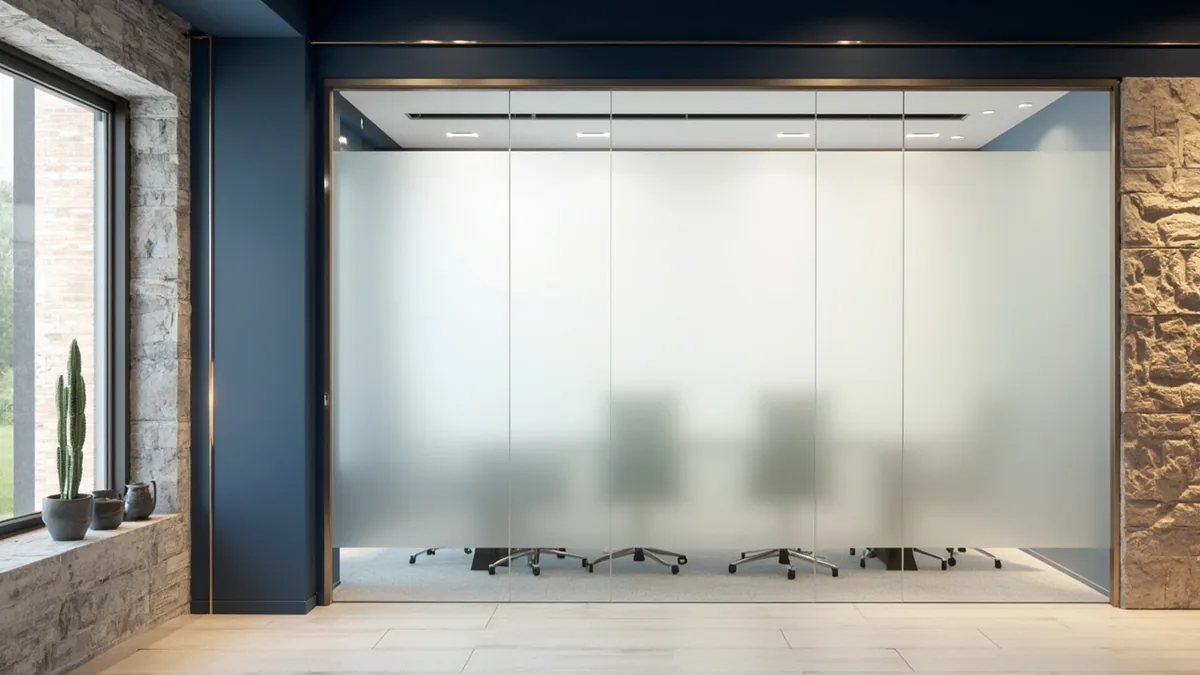
A practical guide to measuring glass areas, checking clearances, and gathering the information needed to specify self-adhesive PDLC smart film.
Confirm the Film and Glass Suitability
WINGO self-adhesive PDLC smart film is a thin, switchable film applied directly to window or glazing surfaces. Its operating mode is clear when powered and opaque when unpowered, although the off state still permits some light through. Before measuring, confirm that self-adhesive PDLC film is appropriate for the project, the glass surface, the intended room, and the selected control arrangement.
The glass must be clean, smooth, and free from damage that could affect application. Ask the supplier or glazing contractor to identify any coatings, tempered-glass markings, laminated construction, or surface treatments that may influence adhesion or installation. Sales should confirm suitability rather than assume every window can receive the film.
The film is intended for applications such as offices, private rooms, hotels, meeting spaces, laboratories, healthcare rooms, and retail windows. Actual suitability should be reviewed against the project location, operating conditions, electrical requirements, and local installation guidance.
Measure Each Glass Opening
Record the width and height of every separate glass panel, including shower screens, fixed windows, doors, and partition panels. Measure the visible glass area rather than the surrounding frame. Take more than one measurement at each width and height and use the smallest reliable result if there is variation.
Note the overall opening dimensions, frame dimensions, glazing thickness, and whether the glass is fixed, hinged, sliding, or otherwise movable. Indicate whether the glass is vertical or inclined. Mark any unusual edges, corners, cuts, notches, or unusual shapes with a simple sketch and dimensions.
Keep each panel’s measurements separate even when several identical panels are planned. This helps the supplier check film coverage, cut sizes, seams, and any custom shaping. Do not reduce the recorded dimensions for a visible border unless a border has specifically been requested and its purpose is clear.
Check Clearances and Application Conditions
Inspect the space around the glass. Record handles, hinges, latches, locks, window furniture, fixed screens, wall finishes, and nearby partitions that could prevent the film from being applied smoothly or cause it to be pulled during normal use.
For doors and operable windows, confirm whether full coverage is required and whether film should stop before moving parts. Sales must confirm whether the proposed layout leaves adequate clearance at edges and corners and whether any panel shape is practical to manufacture.
Check the installation environment. The glass should be accessible, dry, and ready for preparation. Identify dust, moisture, condensation, pets, construction activity, or nearby work that could interfere. Confirm whether the installation will be performed by the customer, a glazing contractor, or another party.
Map Electrical and Control Needs
Self-adhesive PDLC smart film connects to an electrical installation and can be controlled in different ways, including by switch, remote, or app. List the number of panels, whether they will operate together or independently, and where the controls should be located.
Provide the available power location, cable route, control position, and approximate distances between panels and control equipment. Confirm whether concealed routing is required and whether there is access to the window or partition edge. These are planning details for WINGO to review because the final control and wiring arrangement must suit the project.
Also note any need for transparent or opaque states in particular rooms, how frequently switching will occur, and whether the film will be used as a projection surface. Do not assume that app, remote, or switching arrangements are interchangeable without confirmation.
Review Shape, Layout, and Visible Details
For standard rectangular panels, a scaled sketch with width and height is usually sufficient. For custom shapes, provide actual dimensions, corner details, cutouts, and the intended orientation. Ask WINGO to confirm whether the shape can be produced and how multiple pieces can be joined for larger panels or partitions.
Decide how adjoining pieces will appear. Record the expected location of joins, whether a joint should be minimized, and whether the design calls for one continuous switchable area or separate panels. A continuous appearance depends on layout, preparation, and installation conditions, so sales should confirm what is achievable.
Note obstacles such as handles, decals, blinds, shelves, or fittings that could obstruct the view or interfere with application. If the glass is used for privacy, visibility from both sides, changing light conditions, and the desired level of visual separation should be discussed before ordering.
Prepare the Project Information
Send WINGO a measurement sheet containing the project location, panel schedule, glass type, opening and glass dimensions, frame details, panel orientation, condition photographs, a scaled sketch, and notes about usable clearances. Separate schedules for each room or elevation are helpful.
Before purchase, ask sales to confirm film suitability, manufacturable sizes, custom-shape feasibility, the proposed number of pieces, joining approach, control requirements, and any preparation or installation support available for the specific project. Exact product performance, electrical details, and included components should be confirmed in the final quotation or technical communication.
If measurements are still changing, mark them as provisional. Revisit the glass area after frames, furniture, and control positions are final. This reduces the risk of cutting to the wrong size or creating an incomplete installation. To discuss a project with WINGO, share the panel list, sketches, and control requirements for review.