
PDLC Smart Glass: Choosing the Right Glass and Film
WINGO ·
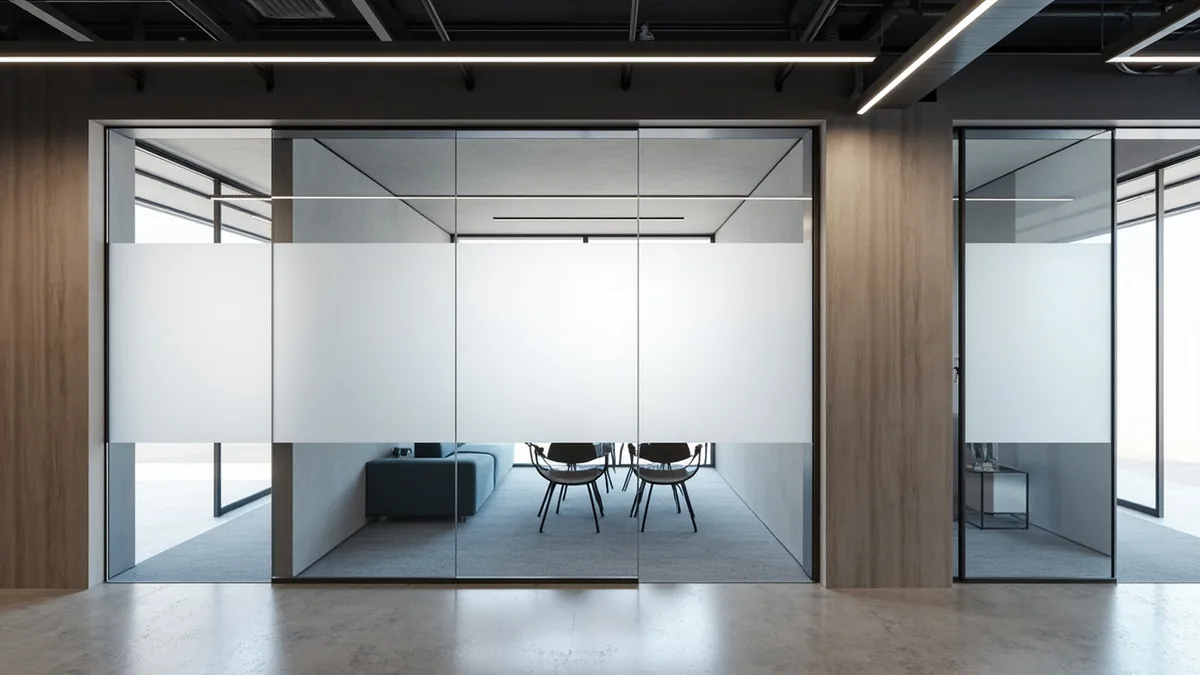
A practical guide to selecting PDLC smart glass or film, from privacy needs and glass construction to controls, installation limits, and project planning.
Choosing Between PDLC Smart Glass and Smart Film
PDLC smart glass is a laminated construction that places PDLC film between two panes of glass. The glass is bonded under heat and pressure, creating a product that switches between clear and opaque states through electrical control. PDLC smart film can also be applied to an existing window or incorporated into glass fabrication. Which option suits a project depends on whether the priority is a complete factory-made assembly or a retrofit that changes an existing opening.
For new partitions, doors, and windows, laminated PDLC smart glass offers a coordinated construction with the film protected inside the glass. For an existing glazed opening, PDLC smart film may be more practical because it can be retrofitted, although the application and wiring still require care. A site assessment should confirm that the pane can be prepared and that the electrical arrangement is appropriate before either route is selected.
How PDLC Switching Works
PDLC means polymer dispersed liquid crystal. In the opaque state, liquid crystal molecules are randomly oriented and scatter incoming light, preventing a clear view. When electrical current is applied, the molecules align and allow light to pass, making the glass appear clear. Removing the current returns the film to its opaque condition.
This means PDLC is primarily a privacy and light-control product, not a general dimmer. The project brief should define whether the required result is a fully clear view, full privacy, or an intermediate appearance between the two. The reference describes opacity as variable, but actual performance and control options should be confirmed for the intended operating arrangement. Sales must confirm suitability whenever the client expects gradual dimming, particular visual uniformity, or a specific response behavior.
Selecting the Glass Build
The available glass constructions include tempered glass, iron-free glass, color glass, and LOW-E glass, with different laminated thickness combinations offered for project requirements. Tempered glass provides a familiar safety-glass option and is commonly combined with PDLC film. Iron-free glass is worth considering where clear visual quality is especially important. Color glass can support decorative applications, while LOW-E glass may be relevant when heat management is part of the design brief.
Glass selection should not be based on appearance alone. The total panel size, opening dimensions, handling requirements, edge conditions, and installation method all affect the appropriate composition. Maximum panel width is stated in the product reference, but every project needs confirmation against the latest manufacturing capability. Sales should verify the final glass specification, cut sizes, edge treatment, laminate arrangement, and whether any insulated-glass requirement changes the construction.
Matching the Film to the Application
PDLC smart film can serve privacy partitions, doors, windows, and existing glazed surfaces. Its uses include separating meeting spaces, providing visual privacy in offices, controlling views at residential windows, and creating switchable display surfaces where suitable projection conditions are available. The film also supports practical benefits such as UV blocking, noise damping, and reduced reliance on blinds or curtains.
Not every installation should be treated as equivalent. Surface condition, pane type, dimensions, and environmental exposure influence whether film-only installation or a laminated glass assembly is more appropriate. The reference notes that laminated PDLC glass can adapt well to wet and complex environments because the film is enclosed within the glass. Existing-film applications need separate preparation and should not be assumed to offer the same protection or installation characteristics without confirmation.
Controls, Power, and Integration
PDLC systems can be operated through several control styles, including remote controls, wall switches, light sensors, voice control, and app-based control. The best choice depends on how the space is used. A wall switch may be sufficient for a private office, while sensors or app integration can support shared rooms or coordinated daily routines.
Because switching is controlled by current, the control system and power arrangement should be planned together. Project teams should confirm how panels are grouped, where the switching hardware will be located, how wiring is concealed, and what happens when power is removed. In the off state, PDLC glass is opaque. Any requirement for an always-clear passage, emergency visibility, or uninterrupted visibility must therefore be addressed explicitly rather than assumed.
Key Selection Questions and Sales Confirmations
Before ordering, ask whether the application is new construction or a retrofit; whether a complete laminated panel or film-only product is preferred; and what privacy state is needed at each time of day. Confirm the opening size, glass appearance, visual quality expectations, control method, power location, installation environment, and whether projection, sound damping, or UV blocking is a priority.
Sales must confirm manufacturability, current product specifications, glass availability, panel sizing, installation requirements, control compatibility, and project-specific suitability. It is also important to distinguish visual privacy from physical security: opaque PDLC glass prevents a clear view but should not be treated as a substitute for an appropriate security barrier without separate evaluation. Final site measurements and manufacturer review should precede any production decision.
Plan the Installation as Part of the Design
PDLC smart glass is easiest to specify when electrical routing, switch positions, frame details, access, and operating behavior are considered early. Retrofitting film may suit an existing window, while laminated glass is often a cleaner choice for a new architectural opening. Both approaches benefit from professional installation because bonding, wiring, switching, and edge protection determine long-term usability.
For residential and commercial projects, documenting the selected glass build, film arrangement, control method, and operating procedure helps future owners or maintainers understand the system. WINGO can discuss your project requirements, review the intended use and site conditions, and help identify the glass and film configuration that should be confirmed for quotation and manufacturing.