
PDLC Smart Glass for Hotel Privacy and Guest Comfort
WINGO ·
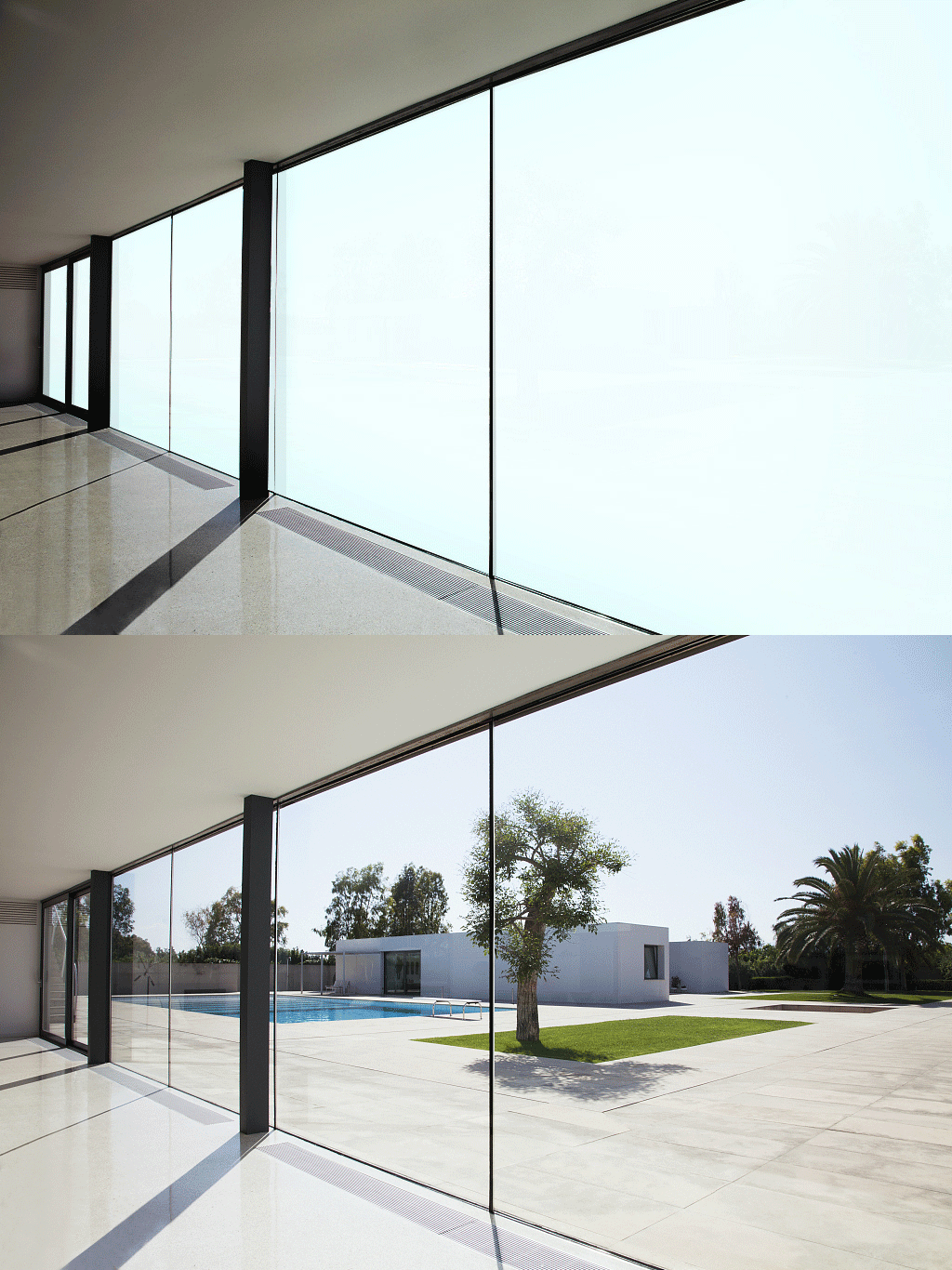
Plan switchable PDLC smart glass for hotel rooms, bathrooms, meeting spaces, and entrances while confirming technical and site requirements before ordering.
Privacy Without Permanent Visual Barriers
PDLC smart glass uses a polymer dispersed liquid crystal film laminated between two layers of glass. With power off, the film appears opaque and provides privacy. With power on, it becomes clear and allows light and visibility through the glass. This makes it useful in hotel rooms, ensuite bathrooms, corridors connecting guest areas, and other locations where privacy is needed without adding permanent curtains or opaque partitions.
For designers, the main benefit is operational flexibility. A transparent partition can support daylight and an open visual style when privacy is not required, then switch to an opaque state when it is. The viewing angle is listed as greater than 160 degrees, making it worth considering for broad interior partitions where users will view the glass from different positions.
Where It Adds Value in Hotel Design
Guest bathrooms are a practical application because they often rely on frosted or obscured glazing for privacy. Switchable glass can provide privacy on demand while coordinating more cleanly with clear glass elsewhere in the room. It may also suit entrance screens, room dividers, wellness areas, and selected meeting or service spaces where the balance between openness and discretion changes throughout the day.
The product structure also offers several stated benefits relevant to hospitality interiors. It blocks more than 99 percent of ultraviolet rays, helping reduce fading in rooms. Its damping action can assist with blocking noise through suitable glazing assemblies, although the final acoustic performance depends on the complete installed system. If projection is required, ask WINGO to confirm the appropriate switching state and lighting conditions for the selected glass assembly.
Integration Into Rooms and Building Systems
PDLC smart glass can be controlled through several interface styles, including remote controls, wall switches, light sensors, voice control, and apps. Hotel projects should determine whether the control method matches existing room-management systems and staff workflows. A simple local wall switch may be easier for guests to understand, while central or app-based control can support integrated building automation.
Power, wiring, busbars, and switching requirements must be coordinated early because the glass is an electrically controlled laminated product. The installation should follow the product's electrical and structural requirements, and appropriate professional review is essential. Actual appearance and operating behavior can depend on glass configuration, installation conditions, and the control arrangement, so sales should confirm the proposed configuration rather than assume compatibility.
Glass Options and Project Selection Questions
Available laminated constructions include several glass-thickness combinations, with tempered glass, iron-free glass, colored glass, and low-emissivity glass listed as options. For hotel work, begin by asking how the partition is fixed, whether it functions as a door, how often it will switch, what privacy level is required, and whether clear-state color, tint, or surface appearance is important to the interior design.
Also clarify the space's daylight conditions, the acceptable appearance of busbars and wiring, the location of power supplies, and whether local switches or centralized controls are preferred. If the installation is in a wet or otherwise demanding environment, ask sales to confirm the suitability of the selected configuration and installation method. Product descriptions note easier installation and better adaptation to wet and complex environments, but these points must be validated for each project.
Limitations to Confirm Before Purchase
PDLC smart glass is not a universal replacement for every window treatment or safety-glass requirement. It does not create additional floor area, fully eliminate sound transmission, or guarantee the same visual clarity in every lighting condition. Projection quality depends on suitable lighting, and privacy performance depends on the glass entering the opaque state correctly.
The reference identifies the product as having safety-glass characteristics, but project teams should still confirm applicable building, fire, accessibility, and glazing requirements with the relevant qualified parties. Dimensions, glass build-up, control method, power arrangement, and site conditions should be documented before ordering. Where the product will be installed as a door or high-traffic partition, sales must confirm whether additional hardware, safety requirements, or fabrication changes are needed.
Planning the Next Step
The most successful hotel applications begin with the guest journey and the operating schedule. Identify where privacy must be immediate, where daylight is most valuable, and which areas need to change function during the day. Then coordinate those needs with interior design, electrical planning, fabricators, and installers before finalizing the glass specification.
To discuss a hotel privacy-glass project with WINGO, share the intended locations, preferred glass appearance, control preferences, and available installation details so the team can review suitability and the next selection steps.