
Planning Non-Adhesive PDLC Film for Laminated Glass
WINGO ·
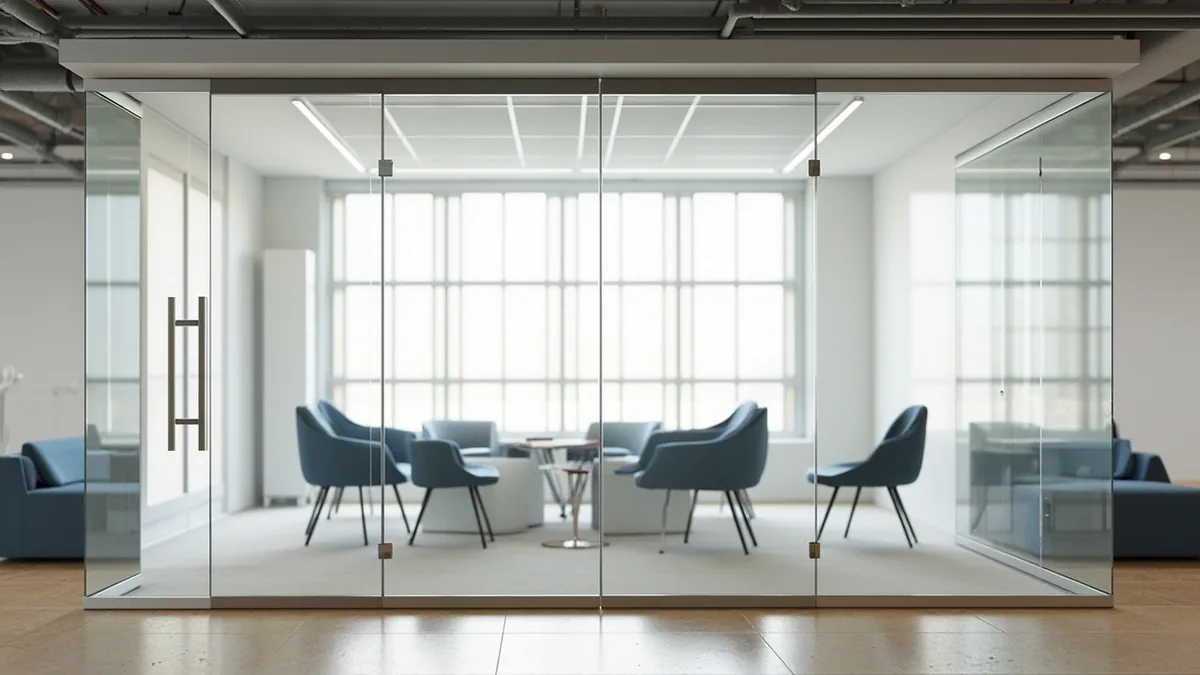
A practical guide for glass fabricators planning switchable laminated glass with non-adhesive PDLC film, including lamination questions and project limitations.
What Non-Adhesive PDLC Film Is
Non-adhesive PDLC film is a laminated smart-film core intended for integration into new glass units. Unlike self-adhesive window film, it does not have a pressure-sensitive adhesive layer and is not designed to be applied directly to an existing pane. The construction uses transparent conductive layers with polymer-dispersed liquid crystal material between them.
For a glass fabricator, the film is therefore a component of a laminated assembly rather than a standalone installation product. The finished unit typically combines the PDLC film with glass and EVA interlayers. The source describes a simple on–off operating mode: the film becomes clear when powered and opaque when unpowered, although it still allows some light to pass through while opaque.
Where It Fits in a New Glass Project
This product is most relevant when new windows, partitions, doors, or other glass elements are being manufactured and the project calls for switchable privacy. It can be incorporated into a laminated glass build rather than bonded to an installed window as a retrofit film.
The reference notes that an existing window cannot simply be converted with this non-adhesive material. If switching an existing pane is the objective, a self-adhesive route would require a different product decision. Do not assume that non-adhesive PDLC film can be installed separately, used as a surface-applied film, or substituted for a complete switchable-glass system.
Key Lamination Questions to Confirm
Ask the supplier and glass fabricator to confirm the exact lamination method, compatible interlayer arrangement, and processing conditions. The reference identifies high-quality EVA film and a standard autoclave process, but it does not provide a complete fabrication recipe. The fabricator should validate the proposed build and confirm that the selected film and interlayers are suitable for the intended production cycle.
Also confirm how electrical connections, busbars, wiring routes, and any required switching equipment will be handled. The supplied information focuses on the film as a glass-lamination raw material and does not define connector selection, conductor placement, power supplies, switching controls, or final system wiring. Those details should be agreed with the relevant technical parties before production.
Appearance and Performance Considerations
The listed optical characteristics include high visible light transmission when the film is on, low haze in the on state, a broad viewing angle, and low hot shrinkage. These features may be useful when evaluating appearance, daylight visibility, and viewing consistency across a project.
Do not treat these figures as a guarantee of the completed installation. Final clarity, haze, viewing performance, and appearance can be affected by the glass combination, interlayers, lamination quality, lighting, viewing position, fabrication process, and system condition. Sales should confirm whether the published film values are applicable to the proposed finished glass configuration and whether a representative sample is required for evaluation.
Handling, Storage, and Fabrication Limits
Because the product is not self-adhesive, handling should focus on protecting the film and maintaining clean, controlled conditions during processing. The fabricator should establish suitable storage, handling, cutting, and lamination procedures. The reference does not specify storage temperature, shelf life, cleaning chemistry, roll orientation, or preparation requirements, so these points need confirmation rather than assumption.
Maximum width is stated in the source, but project drawings should still be checked against the available film size and fabrication constraints. Edge shrinkage, interlayer behavior, glass build-up, and any exposed film edges should be reviewed before approval. The fabricator must also assess whether each glass element can be laminated and electrically connected in a practical way.
What to Bring to the Project Review
Prepare the architectural drawings, finished glass dimensions, selected glass types, intended privacy-control zones, and an explanation of how the user will switch the system. Clarify whether the requirement is new construction or an existing-window retrofit, since this non-adhesive film is intended for smart-glass manufacture.
Request a current technical confirmation covering film dimensions, lamination compatibility, processing conditions, electrical connection details, sample availability, and the expected finished-glass appearance. If the project depends on a specific visual result, lighting condition, viewing angle, or switching experience, ask for an appropriate evaluation sample and document the acceptance criteria before ordering.
Discuss Your Project with WINGO
Non-adhesive PDLC film can be a strong starting point for new switchable glass, provided the lamination design, electrical arrangement, and finished appearance are confirmed for the actual project. WINGO can help you review the product route and prepare the questions for your glass fabricator. Contact WINGO to discuss your drawings, glass configuration, installation stage, and technical requirements.