
Non-Adhesive PDLC Film for Glass Fabrication Planning
WINGO ·
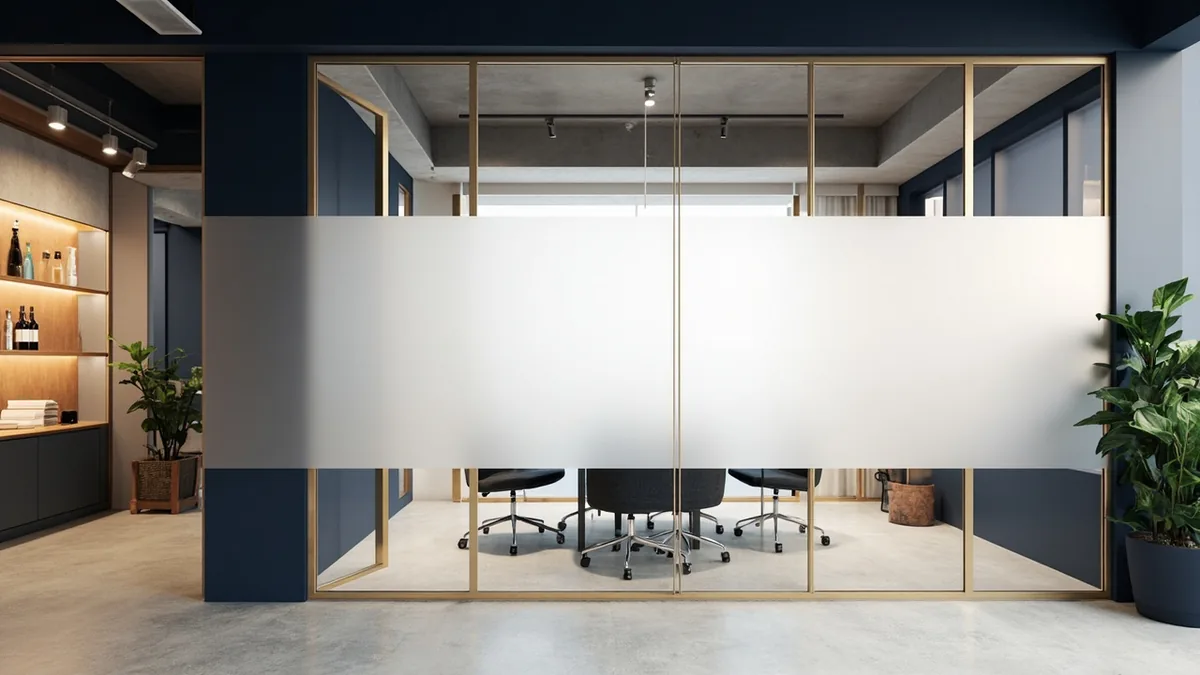
Plan glass fabrication around non-adhesive PDLC film, lamination, electrical switching, glass selection, edge design, and factory confirmation before production.
What This Product Is
Non-adhesive PDLC film is a laminated smart-film component intended to be enclosed between two panes of glass. It does not have a self-adhesive layer, so it is not a stand-alone window film and cannot be installed directly onto an existing pane. WINGO supplies it primarily as a core material for fabricators making switchable smart glass.
The film uses transparent conductive layers with polymer-dispersed liquid crystal between them. In its powered state, the liquid crystal molecules align and the glass appears transparent. Without power, their arrangement becomes irregular and the glass turns opaque while still allowing some light through. This is an on–off function rather than a continuously adjustable dimming control.
Plan the Laminated Glass Build-Up
Design the glass as a bonded laminate rather than treating the film as a surface layer. A typical construction places the PDLC film between EVA interlayers and two glass panes. The build-up must be reviewed by the glass fabricator because glass thickness, interlayer selection, film orientation, edge treatment, and lamination conditions all affect the finished assembly.
The film is laminated in an autoclave using a suitable EVA interlayer. This process is essential to producing a stable, usable glass unit. Do not assume that ordinary adhesive film installation methods are suitable: the non-adhesive product requires controlled lamination between glass components.
Before releasing drawings, confirm whether the project needs one film layer or a more complex arrangement, and define which surfaces require access for power connections. The fabricator should also establish whether the glass is a single laminated panel, a double-glazed unit, or part of an insulated-glass assembly. Each option can introduce different fabrication and electrical requirements.
Glass and Edge Considerations
Glass selection should be coordinated with the fabricator rather than made independently. Consider the pane dimensions, visible edges, cutouts, corners, and any areas where the film approaches a glass edge. The reference identifies low hot-shrinkage behavior and highlights edge shrinkage as an important fabrication concern, so edge construction deserves early review.
Do not infer that the film can safely accommodate sharp corners, unusual cutouts, small edge distances, or complex polished edges without validation. Ask the fabricator to assess these details and approve the final glass preparation. Any hardware, frame, seal, or spacer must also be compatible with the laminated construction and the electrical design.
Electrical and Switching Planning
Plan how power will reach the conductive film and how the switching control will be mounted, connected, and maintained. The electrical arrangement should be reviewed with the fabricator and the system integrator before glass production, especially when the film is incorporated into doors, partitions, façades, or interior privacy panels.
The on state is transparent, while the off state is opaque. In the off state, light can still pass through, so the product should not be described as complete blackout. If a project requires a defined privacy level, daylight transmission, or a particular visual effect, test the complete assembly under the expected viewing and lighting conditions. Confirm the desired control sequence, power supply arrangement, and service access before fabrication.
Ask WINGO and the fabricator to confirm the applicable electrical details for the selected film and glass construction. The supplied product information does not establish a complete wiring design, voltage plan, switching specification, or installation method for every project.
Selection Questions for Fabricators
Before ordering, clarify the application: new glazing, a partition, a door, a conference room, a hotel room, or another interior or exterior use. Establish the required panel dimensions, glass type, edge exposure, opening direction, viewing expectations, control method, and installation environment.
Also confirm how samples and production pieces will be evaluated. The reference provides optical and dimensional performance characteristics, but those figures should be used as product information—not as a substitute for project-specific testing. Sales must confirm suitability when the project includes special glass, tempered components, insulated glazing, unusual shapes, code requirements, or integration with building systems.
Provide the fabricator with the final drawings and a written list of required functions. WINGO can discuss the film selection and fabrication questions with you before you commit to a glass structure.
Discuss the Project with WINGO
Successful smart-glass fabrication starts with choosing the right laminated construction, not simply choosing a film by appearance. Share your drawings, glass details, power concept, and operating requirements with WINGO so the material and fabrication plan can be reviewed together. Contact WINGO to discuss your project and confirm the next technical steps.